

When a metal roof starts leaking after a few seasons, the problem is rarely the steel itself — it is almost always the connection system. The way roof panels lock together determines whether a roof survives 10 years or 40 years without repairs. In modern construction, especially across residential and commercial projects in the US and Europe, three connection systems dominate the market, and each one solves a very different engineering task.
Understanding these systems is not just theory. Contractors, fabricators, and machine operators directly choose roll forming equipment based on the connection type they plan to produce on-site or in a workshop.
Types of Roof Panel Connection Systems
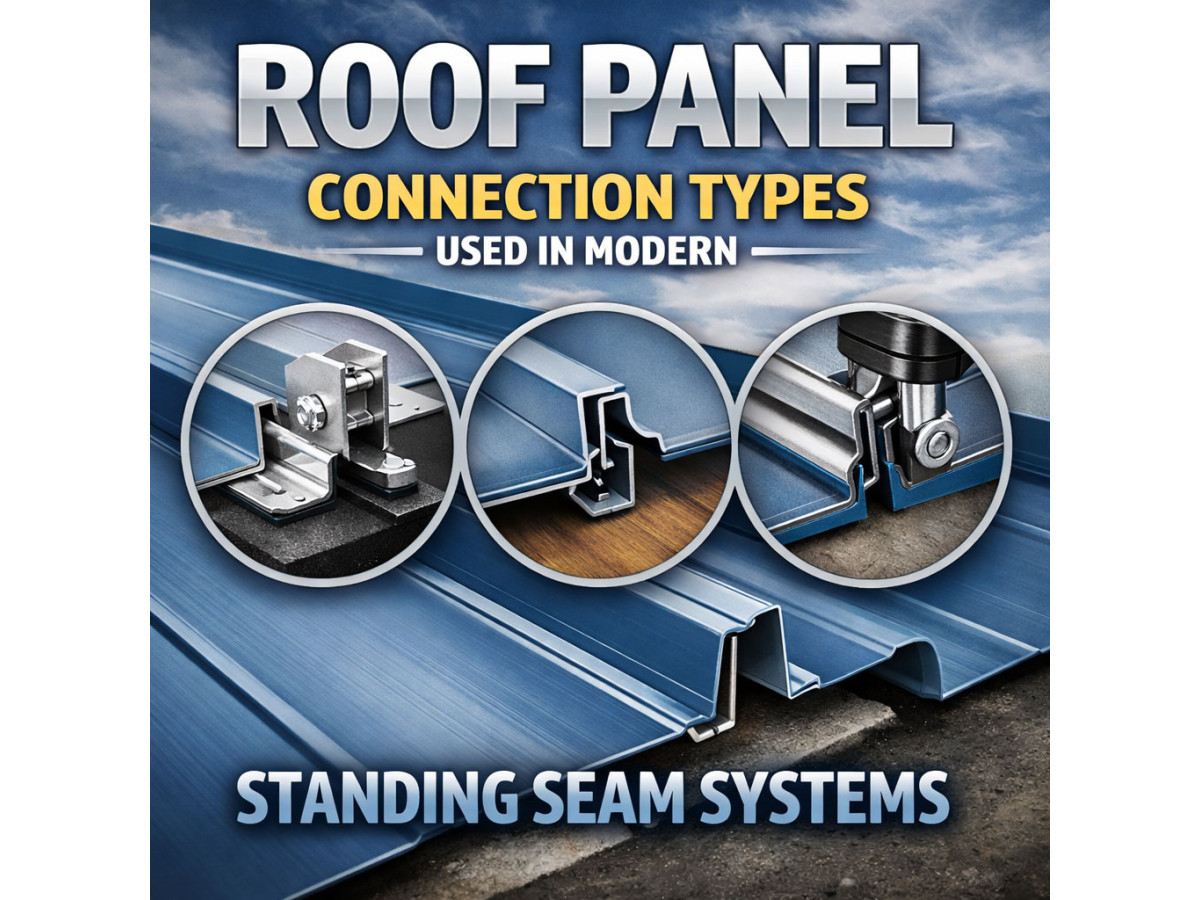
In practice, metal roofing panels are joined using concealed fastening technologies designed to protect screws and seams from water, wind uplift, and thermal movement. The most widely used systems include Snap Lock, Mechanical Standing Seam, and Nail Flange profiles.
Snap Lock System
Snap Lock is designed for speed. Panels are shaped with interlocking edges that simply “snap” together without a seaming tool. This system is widely used in residential roofing because it reduces installation time by up to 35–40% compared to mechanical seaming.
- Quick installation without special seaming machines
- Ideal roof pitch: 3:12 and higher
- Common panel widths: 12"–20"
- Popular in housing projects and light commercial buildings
Snap Lock works best when thermal expansion is moderate. In extreme climates, tolerances become more critical.
Mechanical Standing Seam
This is the most durable connection system used in modern metal roofing. After panel installation, seams are mechanically folded using a seaming machine, creating a single or double lock. Double lock systems can withstand wind uplift pressures exceeding 110–150 mph depending on structure design.
- Single lock or double lock seam options
- High waterproofing performance
- Used in industrial, coastal, and high-wind zones
- Service life often exceeds 40–50 years
Mechanical seams require more time but deliver maximum reliability.
Nail Flange System
Nail Flange profiles are fixed through a mounting flange and then covered by the next panel. It is a budget-friendly solution used in small structures and basic roofing projects.
- Budget installation method
- Semi-hidden fasteners
- Sheds, garages, low-rise buildings
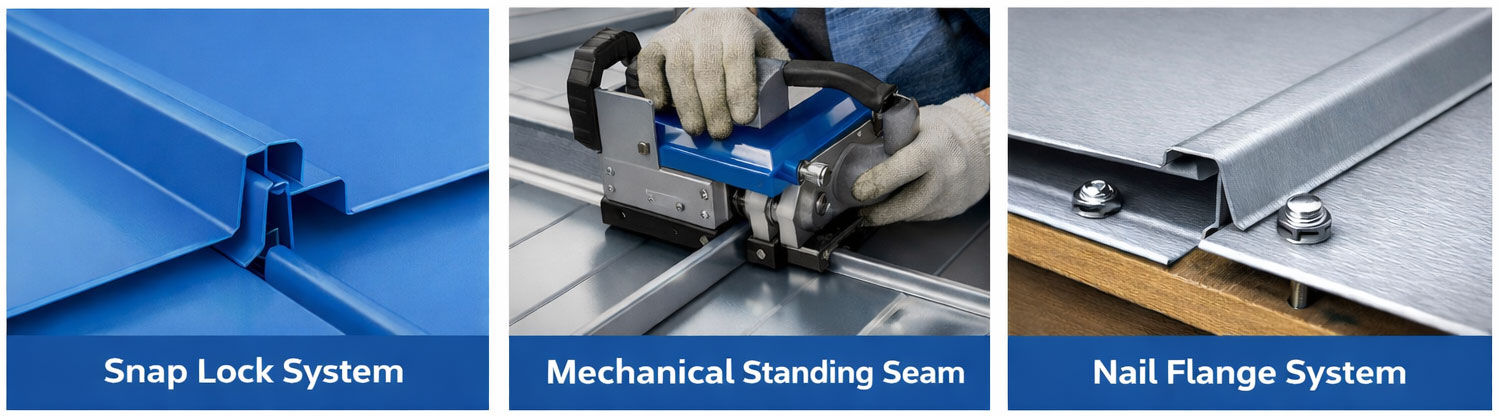
Most Popular Roof Panel Connection Types
| System | Popularity | Main Use | Durability |
|---|---|---|---|
| Snap Lock | ≈60% | Residential roofing | Medium–High |
| Mechanical Standing Seam | ≈35% | Commercial / industrial | Very High |
| Nail Flange | Moderate | Budget structures | Medium |
What SS4E-15 Can Produce
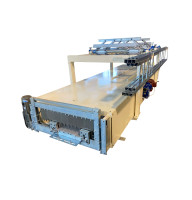
The SS4E-15 standing seam roof panel roll forming machine is designed for 1" and 1.5" mechanical standing seam profiles. It is widely used for on-site jobsite production.
The machine can be mounted on a trailer, allowing production directly at the jobsite and reducing transport damage and logistics costs.
- 1" and 1.5" mechanical standing seam profiles
- Coil-fed production system (24–30 gauge steel)
- Jobsite manufacturing capability
- Up to ~30 ft/min production speed
What SS4E Pro Is Designed For
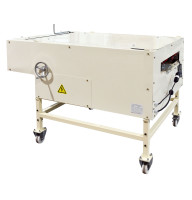
The SS4E Pro is a flexible multi-profile system designed for Snap Lock and architectural roofing production.
- Snap Lock profiles: 1", 1.5", 1.75"
- Adjustable panel width 12"–24"
- Workshop and jobsite use
- Interchangeable tooling system
How to Choose the Right Machine
Contractors working on residential projects usually choose Snap Lock systems due to speed. Industrial clients prefer mechanical standing seam systems for durability and compliance.
Mechanical systems like SS4E-15 are cost-effective when most projects involve complex or high-wind roofing applications. SS4E Pro is better for mixed production and flexible contracting work.
FAQ
What is the difference between Snap Lock and Mechanical Standing Seam?
Snap Lock connects without tools, while Mechanical Standing Seam requires seaming equipment for higher durability.
Can SS4E-15 be used on a jobsite?
Yes, it can be trailer-mounted and used directly at construction sites.
Which machine is better for beginners?
SS4E Pro is more beginner-friendly due to multi-profile flexibility.
Can one machine produce multiple profiles?
Yes, SS4E Pro supports interchangeable tooling.
What material thickness is supported?
Typically 0.3–0.6 mm steel depending on configuration.