





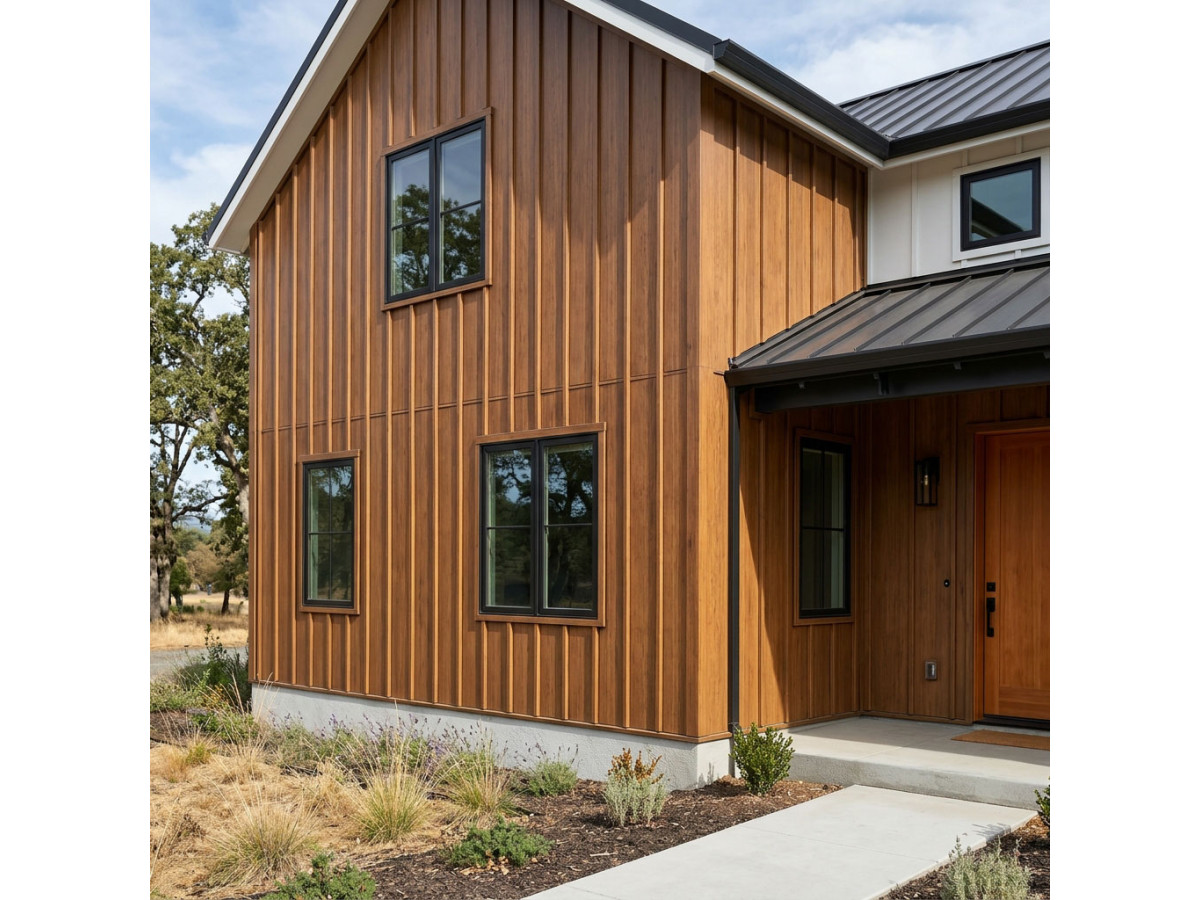
Metal Board and Batten siding combines the traditional appearance of vertical wood siding with the durability and low maintenance of metal. Adding a realistic wood grain texture creates an even more distinctive product: architectural metal panels that reproduce the look of natural timber without relying on solid wood boards.
For metal building contractors, siding manufacturers, and entrepreneurs, this product offers an opportunity to expand into decorative metal cladding. With the right production equipment, businesses can manufacture Board and Batten profiles and add embossed wood grain patterns to create a differentiated line of metal siding panels.
This guide covers the product, manufacturing process, equipment options, machine prices, and a practical method for estimating potential return on investment.
What Are Metal Board and Batten Siding Panels?
Board and Batten is a traditional vertical siding style made up of wide boards with narrow strips, called battens, covering the joints between them. This creates a recognizable pattern of wide and narrow vertical sections.
Metal Board and Batten siding recreates this architectural design using roll-formed steel or aluminum panels. Instead of installing separate wood boards, contractors use formed metal panels designed to produce a consistent vertical appearance.
Residential Applications
- Residential homes and exterior renovations
- Barndominiums and metal homes
- Garages and workshops
- Decorative exterior accent walls
Commercial Applications
- Post-frame and agricultural buildings
- Commercial building facades
- Storage and utility buildings
- Architectural metal cladding projects
Steel and aluminum panels provide consistent dimensions and do not rot or attract wood-boring insects. Their long-term performance depends on the base material, protective coating, installation method, and local environmental conditions.
Wood Grain Texture: The Appearance of Natural Timber
A smooth painted metal surface can look very different from traditional wood siding. Wood grain texture gives metal panels a more natural appearance by reproducing the lines, patterns, and visual depth associated with timber.
Embossed Wood Grain
Patterned rollers create raised or recessed details directly on the sheet material. The resulting texture is physical, not just a printed image.
Wood Grain Printing
A decorative print reproduces the colors and grain patterns of wood on a metal surface.
Textured Painted Finishes
Special coatings provide a textured appearance, depending on the coating technology and material.
Custom Wood-Look Designs
Possible design directions include oak, walnut, cedar, weathered wood, and other timber-inspired patterns.
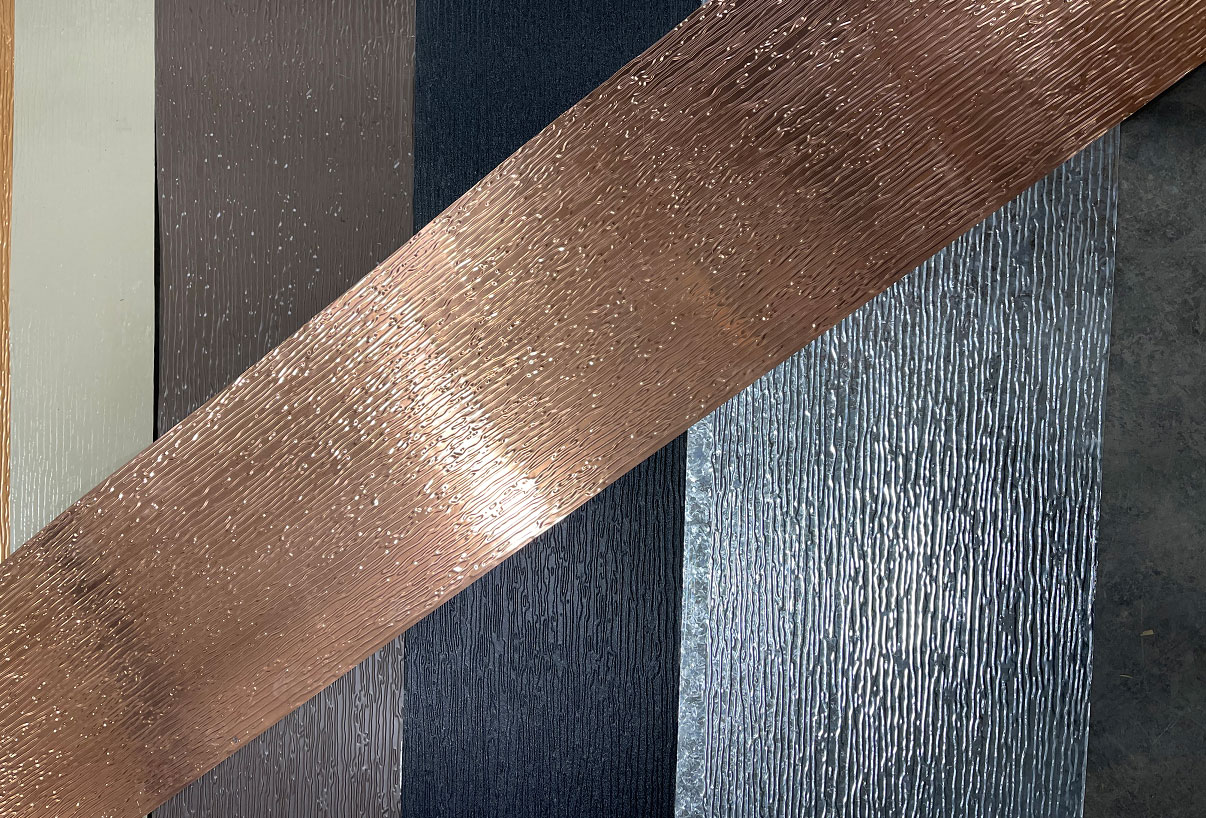
Embossing is particularly interesting for manufacturers who want to offer a product with a tactile surface. The texture can help distinguish embossed metal siding from conventional smooth panels and printed finishes. The actual appearance depends on the embossing rollers, coating, and material selected.
Benefits of Wood Grain Metal Board and Batten Siding
Wood-Inspired Appearance
The textured surface gives metal siding a warmer, more natural look. It can complement traditional homes, modern barndominiums, and contemporary commercial buildings.
Less Maintenance Than Natural Wood
Metal does not rot or suffer from wood-boring insects. Depending on the coating and installation, it can also reduce the need for regular maintenance associated with natural timber siding.
Consistent Panel Dimensions
Roll forming produces repeatable profiles from metal coil. This helps manufacturers maintain consistent panel geometry across production batches.
Product Differentiation
Embossed wood grain gives manufacturers an opportunity to offer something beyond standard smooth metal siding.
The potential selling price and margin depend on material costs, finish quality, local competition, and customer demand.
Applications: Homes, Barndominiums and Commercial Buildings
Metal Board and Batten siding is used in both residential and commercial construction. A wood grain finish can make the panels particularly suitable for projects where the appearance of natural timber is important.
- Homes: Full exterior siding or decorative sections combined with other materials.
- Barndominiums: Vertical cladding that complements metal roofing and modern rural architecture.
- Post-frame buildings: Exterior panels for agricultural and residential structures.
- Garages and workshops: A consistent architectural finish for detached buildings.
- Commercial properties: Decorative facades, entrance areas, and accent walls.
The final panel design should be selected according to the building's architectural requirements, local building codes, weather exposure, and installation system.
How Metal Board and Batten Siding Panels Are Manufactured
Production involves two distinct operations: creating the wood grain surface texture and forming the final siding profile. These operations require different equipment.
Prepare the Metal Material
Production starts with a suitable metal coil or sheet. Common options include painted steel and galvanized steel. Aluminum may also be used when the material thickness and machine configuration are appropriate.
The manufacturer must select the material thickness, coil width, coating, and surface finish according to the intended panel specifications.
Apply the Wood Grain Texture
An embossing machine uses patterned rollers to create a raised or recessed design on the metal surface. The selected pattern determines the appearance of the finished material.
Before starting production, manufacturers should test the chosen metal and embossing pattern to verify the texture and surface quality.
Form the Board and Batten Profile
The material is then processed through a roll forming machine. A series of forming rollers gradually shapes the flat sheet into the required vertical Board and Batten profile.
The tooling configuration determines the final panel geometry, including the wide sections, raised battens, and other profile details.
Cut Panels to the Required Length
After forming, panels are cut to the required length. Depending on the equipment configuration, cutting can be performed manually or with an automatic shear and controller.
Finished panels are inspected for dimensions, surface quality, and consistency before packaging and delivery.
Equipment for Manufacturing Wood Grain Metal Board and Batten Siding
Producing this type of siding requires equipment for both profile forming and surface texturing. StanGroup offers two machines that can be considered for these operations.
SS4E-PRO Portable Board and Batten Siding Roll Former
The SS4E-PRO is designed to manufacture Board and Batten metal siding panels. Its portable, trailer-ready design allows contractors and manufacturers to produce panels in a workshop or directly at a construction site when configured for mobile operation.
- Panel width: 10"–18", depending on profile configuration
- Material width: 13.75"–20"
- Galvanized steel: 29–24 gauge
- Aluminum: 0.019"–0.032"
- Copper: 16–20 oz.
- Production speed: 25–70 ft/min
- Motor: 1.5 HP AC
- Power: 110/220V single phase
- Generator: 5 kW, 33 Amp and above
Standard equipment includes a wireless remote control system, manual exit shear, panel length control, forming rollers, and drive rollers.

- Automatic shear with PLC controller
- Flatbed trailer: $8,500
- Enclosed trailer: $16,000
- Warehouse stand with casters: $1,750
- Vent perforation unit: $3,700
- Gas-hydraulic power unit, hydraulic drive, and shear upgrade: $15,000
The SS4E-PRO performs the profile-forming operation. It does not independently create the wood grain texture.
Wood Grain Embossing Machine for Sheet Metal
The Wood Grain Embossing Machine adds a physical wood grain pattern to sheet material. It is designed for manufacturers producing textured metal siding, Board and Batten panels, decorative wall panels, and other architectural products.
- Maximum embossing width: 13"
- Maximum material feed width: 14"
- Embossing speed: 30 ft/min
- Painted steel: 30–24 gauge
- Galvanized steel
- Aluminum and copper
- Light-gauge stainless steel
- Paper, cardboard, PVC, ABS and polycarbonate
- Power: 110/220V single phase
- Production line synchronization: available
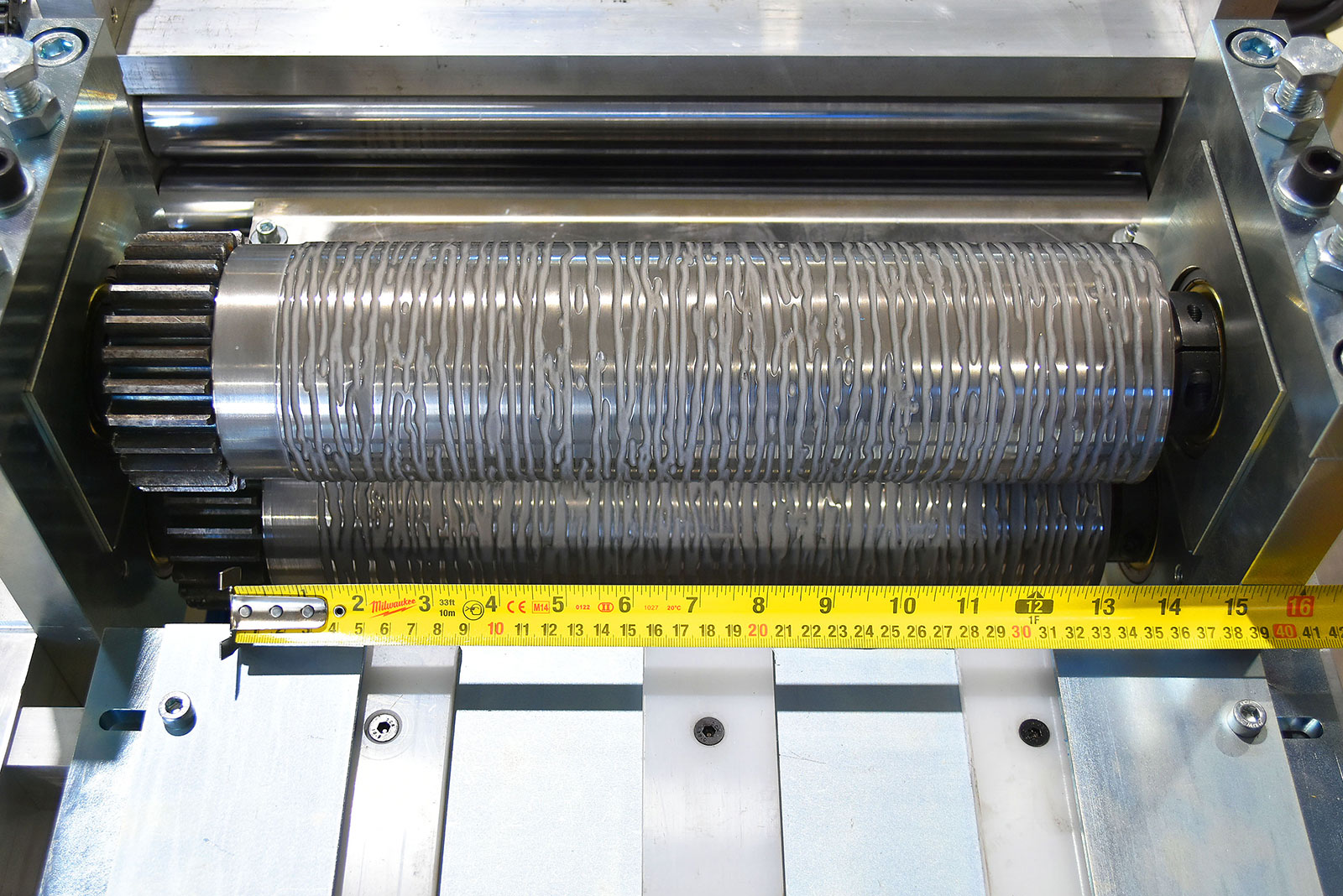
The machine uses precision-machined embossing rollers to create raised or recessed wood grain patterns. Custom embossing rollers can also be manufactured for specific texture requirements.
It can operate as a standalone unit or be synchronized with a compatible production line.
View Embossing Machine DetailsCombined Equipment Price
The two machines perform different production operations. Their listed base prices provide an initial reference for estimating the equipment investment.
| Equipment | Listed Price |
|---|---|
| SS4E-PRO Board and Batten Roll Former | $40,750 |
| Wood Grain Embossing Machine | $17,000 |
| Combined Base Price | $57,750 |
The combined price does not include optional upgrades, additional material handling equipment, shipping, taxes, installation, raw materials, or working capital.
Check Machine Compatibility Before Ordering
- The SS4E-PRO accepts material widths from 13.75" to 20".
- The Wood Grain Embossing Machine has a maximum feed width of 14".
- The embosser has a maximum embossing width of 13".
This means the published specifications overlap only within a limited material-width range. The maximum embossing width is also narrower than the minimum listed material width for the SS4E-PRO.
Consequently, the two machines should not be treated as a universally compatible, ready-to-run production line for every Board and Batten panel configuration.
Before purchasing, confirm the following with StanGroup engineers:
- The exact material width and panel profile.
- The required width and location of the embossed pattern.
- Whether the intended material can be embossed before roll forming.
- Whether the embossing operation should take place before or after profile forming.
- The production speed and synchronization requirements.
- Whether additional material handling equipment or a different configuration is needed.
This technical review is essential for planning a reliable production process.
Metal Board and Batten Siding Production: Price and ROI
The profitability of manufacturing wood grain metal siding depends on the cost of raw material, production efficiency, selling price, and the volume of panels a business can sell.
Variable Production Costs
- Painted or galvanized steel coil
- Material thickness and coil width
- Embossing and coating requirements
- Production labor and electricity
- Material waste and setup time
- Packaging and transportation
Business Operating Costs
- Equipment maintenance
- Rent and insurance
- Sales and marketing
- Administrative expenses
- Financing costs
- Other fixed overhead
A manufacturer should calculate the contribution margin per square foot rather than looking only at the difference between the raw material price and the selling price.
How to Calculate the Break-Even Point
Contribution per square foot = Selling price per square foot − Variable production cost per square foot
Variable costs include the material, direct production labor, packaging, and other expenses that increase with production volume.
The following example uses the combined base equipment price of $57,750 and several hypothetical contribution margins.
| Contribution per sq. ft. | Sales Volume Needed to Recover $57,750 |
|---|---|
| $0.75 | 77,000 sq. ft. |
| $1.00 | 57,750 sq. ft. |
| $1.50 | 38,500 sq. ft. |
| $2.00 | 28,875 sq. ft. |
These are illustrative calculations, not actual market prices or guaranteed margins. They show how the contribution margin affects the amount of product that must be sold to recover the base equipment cost.
The calculation excludes additional startup expenses, fixed overhead, taxes, financing costs, and other investments.
Estimated Equipment Payback by Monthly Contribution
Another way to evaluate the investment is to estimate the monthly cash contribution available to recover the equipment cost.
| Monthly Contribution Available for Equipment Recovery | Theoretical Payback |
|---|---|
| $3,000 | 19.3 months |
| $5,000 | 11.6 months |
| $8,000 | 7.2 months |
| $10,000 | 5.8 months |
These figures are mathematical examples, not sales forecasts. The monthly contribution must be calculated after variable production expenses and operating costs that the business needs to pay. The actual payback period may be longer if the company has additional startup costs, financing payments, taxes, downtime, or insufficient demand.
For a realistic business plan, estimate monthly sales volume, calculate the contribution margin per square foot, and account for all fixed and variable costs before deciding whether the investment makes financial sense.
Is Wood Grain Metal Siding a Good Product to Manufacture?
Wood grain metal Board and Batten siding can help manufacturers expand beyond standard roofing and wall panels into decorative architectural products.
The opportunity may be particularly relevant for businesses that already serve:
- Metal roofing and siding contractors
- Barndominium builders
- Post-frame construction companies
- Metal building suppliers
- Residential exterior renovation contractors
- Architectural metal panel distributors
Before investing, research local contractors, building suppliers, and distributors. Find out which panel widths, colors, textures, and material gauges they need. Physical samples can help potential customers evaluate the wood grain appearance and compare it with smooth or printed metal finishes.
It is also worth comparing embossed material with prefinished wood-look coil. The best production method depends on the required appearance, material availability, equipment compatibility, and expected order volume.
- Identify potential buyers and local demand.
- Choose the required panel profile and dimensions.
- Prepare samples of the proposed wood grain finish.
- Confirm material and machine compatibility.
- Estimate production costs and realistic monthly sales.
Start Producing Metal Board and Batten Siding Panels with StanGroup
StanGroup offers equipment for Board and Batten profile forming and wood grain embossing, with factory-direct pricing and technical support.
The SS4E-PRO Board and Batten Siding Roll Former is listed at $40,750, while the Wood Grain Embossing Machine is listed at $17,000. Their combined base price is $57,750 before optional equipment and other startup expenses.
If you are planning to manufacture wood grain metal siding, contact StanGroup to discuss your required panel dimensions, material specifications, embossing pattern, and production targets. The technical team can help review machine compatibility and identify a suitable configuration for your application.
SS4E-PRO Roll Former Wood Grain Embossing MachineContact StanGroup for current pricing, available options, technical consultation, and delivery information for the USA, Canada, and Mexico.